The Goldfine Memorandum
Fred's formal objection to releasing Bernard Goldfine's records — the document that put him in the White House's crosshairs.
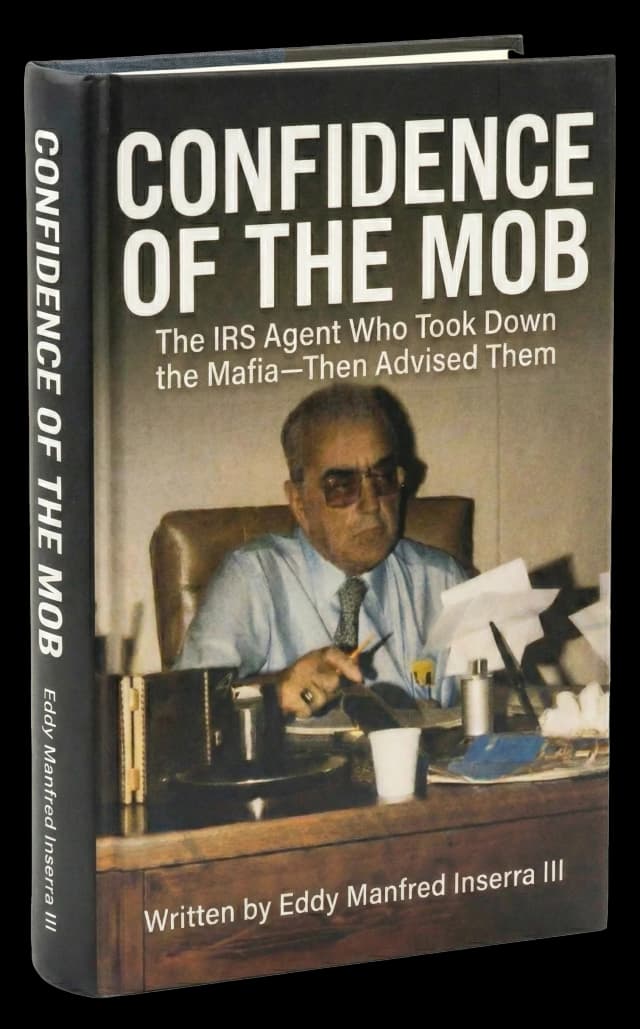
Open file →A Florida orange crate in my mother's attic held secret files, wiretap logs, and evidence that Fred Pastore — the IRS agent who took down the Boston Mafia — became a target of the White House. And then went to work for the other side.
Catch the official show trailer from WGN Chicago's Backstory with Larry Potash featuring the story of Fred Pastore and Confidence of The Mob.
Our featured episode airs November 22nd on WGN.
▶ [0:40]Keep an eye out for our story right at the 40-second mark of the trailer!
The evidence
Wiretap logs, IRS memoranda, and a telegram sent to President Kennedy — documents that sat unread for seventy years. Open the folders.
Fred's formal objection to releasing Bernard Goldfine's records — the document that put him in the White House's crosshairs.
Open file →April 13, 1961: a career agent wires the President and the Attorney General directly. The acknowledgment came from Kenneth O'Donnell. The answer never came.
Open file →Surveillance notes from the streets of Boston's North End — the racket-busting casework that earned Fred the name "the Eliot Ness of Boston."
Open file →Interrogate the archive
An AI trained on the case files, the book, and the archival record. Ask it anything — it answers from the documents, and shows you which ones.
Why did Fred leave the IRS?
The paper trail points to April 1959. His memorandum to Regional Commissioner Bacon objected to releasing Goldfine's records — and the pressure that followed came from above his pay grade. Want to see the memo itself?
Reader verdicts
"I don't know how you did it, but somehow you made being an IRS agent sound pretty f*cking cool."— CG27 · Verified reader